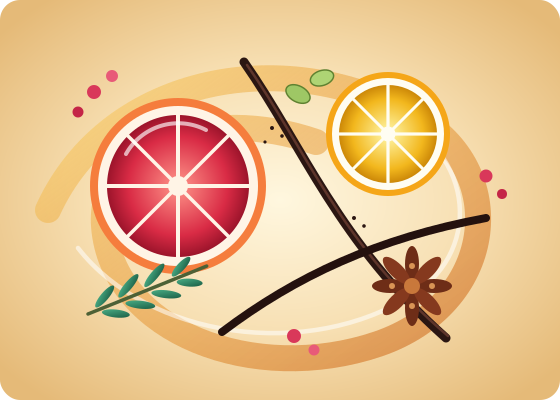
Modern artisanal candymakers are reimagining the humble lollipop and apothecary hard drop as multi-layered culinary compositions. Think roasted Japanese yuzu swirled with emerald pistachio, tart ruby hibiscus steeped with cracked pink peppercorn, and wildflower tupelo honey poured around pressed garden violas.
Mass-market confections rely on flat artificial esters that peak in five seconds. Small-batch confectioners compose flavor like perfumers and pastry chefs—sequencing bright citrus top notes, caramelized cane bodies, culinary herbs, and mineral salt finishes.
Aromatic Chemistry
The Three-Act Architecture of a Botanical Lollipop
Because boiled cane syrup reaches 300°F to 310°F at the hard-crack stage, timing determines whether delicate botanicals sing or vanish in steam. Experienced kettle cooks let molten sugar rest off the flame until bubbling subsides near 258°F before folding in cold-pressed citrus peel oils, floral hydrosol reductions, and freshly cracked spices.
As a solid lollipop dissolves slowly across ten to fifteen minutes, trapped pockets of flaky sea salt, freeze-dried berry dust, and whole spice husks release staggered bursts of contrast—keeping the palate curious from outer rim to paper stick.
Heritage Formats
Apothecary Cushion Drops & Acidulated Pastilles
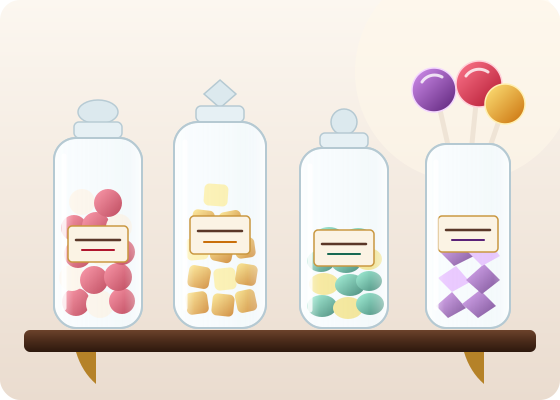
Before cellophane wrappers existed, neighborhood confectioners displayed jewel-bright drops inside heavy ground-glass apothecary jars. Pressing warm ribbons through engraved brass drop rollers forms crisp pillow squares, sour Montmorency cherry ovals, and honeycomb-centered cubes dusted lightly in superfine cane sugar so pieces clink like sea glass without sticking.
Chord No. 01
Blood Orange, Hibiscus & Szechuan-Pink Pepper
Deep crimson hibiscus calyx reduction lends a cranberry-like tang that amplifies sweet Moro blood orange oil, while rosy peppercorn husks deliver a warm woodsy sparkle.
Acid BalanceMalic + Citric
Visual CastRuby Glass
Chord No. 02
Black Sesame, Toasted Coconut & Muscovado
Nutty stone-ground black sesame paste marbled into dark Mauritius muscovado cane creates an opaque, roasted praline lollipop crowned with crisp toasted coconut flakes.
Acid BalanceZero-Acid Savory
Visual CastObsidian & Gold
Chord No. 03
Roasted Yuzu, Tarragon & Salted Pistachio
Fragrant Japanese yuzu zest paired with sweet French tarragon’s subtle anise lift, finished on the back of the disc with emerald Sicilian pistachio nibs and flaky sea salt.
Acid BalanceHigh Tart Snap
Visual CastCeladon Swirl
Chord No. 04
Boysenberry, Culinary Lavender & Cardamom
Jammy Pacific Northwest boysenberry reduction balanced by a whisper of Provence lavender buds and freshly cracked green cardamom seeds for floral depth.
Acid BalanceTartaric Crisp
Visual CastAmethyst Prism
Interactive Flavor Workbench
Aroma & Botanical Lollipop Pairing Studio
Combine one of four artisanal kettle sugar bases with a botanical spice or fruit infusion to inspect the resulting lollipop architecture, aromatic fold-in temperature, three-stage palate progression, and marble-slab casting note.
Step 01 · Choose Molten Sugar Base
Step 02 · Layer Botanical & Spice Infusion
Fold Aromatics at 262°F (128°C)
Tupelo Amber & Crushed Pink Peppercorn Prism
Floral Georgia tupelo honey cooked to clear hard-crack glass, studded with cracked Peruvian pink peppercorns that release rosy pine warmth as the sugar slowly dissolves.
First LickSun-warmed clover & blossom honey
Mid-Melt HeartResinous berry-pepper sparkle
Crystalline FinishClean golden butterscotch snap
Tart Acid Lift
35%
Botanical Bouquet
85%
Caramel Depth
75%
Confectioner's Slab Tip: Crack pink peppercorns coarsely in a mortar and sieve away fine dust so translucent honey glass stays crystal-clear around each ruby husk.
Inside the Sugar Atelier
Copper, Marble & Light: Three Pillars of Handmade Confectionery
Great artisanal candies owe their gloss and mouthfeel to physical transformations inside boiled sucrose—from amorphous vitrification on stone slabs to hand-pulled satin ribbons and Venetian-style slice-and-cut rock candy.
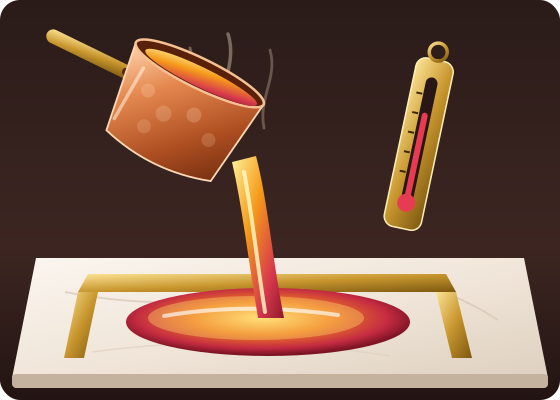
Unlined hammered copper conducts heat nearly twenty times faster than stainless steel, eliminating hot spots as water evaporates above 290°F.
Table sugar wants nothing more than to lock back into grainy white crystals. To cast lollipops as clear as optical lenses, confectioners pair pure cane sucrose with non-crystallizing corn or tapioca glucose syrup—interfering molecules that block crystal lattices from forming as the syrup cools rapidly.
Pouring that 305°F batch between heavy brass bars on an oiled Carrara marble slab extracts heat evenly from the underside. Using oiled steel bench scrapers, the maker folds cooler perimeter edges toward the center so botanical colors, organic fruit acids, and essential oils distribute without trapping air bubbles.
Wash Down Kettle Walls: A wet pastry brush dissolves stray sugar crystals clinging above the boil line before they can seed graininess.
No Stirring Past 220°F: Once syrup reaches a rolling boil, agitation encourages premature crystallization; let convection do the work.
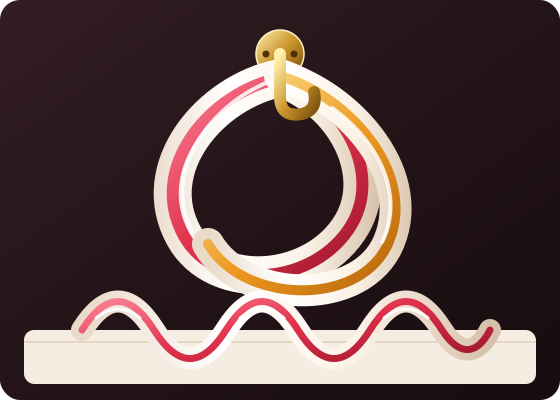
Repeatedly stretching warm sugar over a brass hook aligns microscopic air tunnels, turning clear amber into pearlescent satin.
Technique Monograph 02
Aerated Satin Pulls & Featherweight Ribbon Candy
How does transparent golden sugar turn snowy pearl white without a drop of opaque pigment? The secret is physics: when pliable 195°F sugar is looped, stretched, and folded seventy times across a heavy wall-mounted brass hook, millions of microscopic air capillaries stretch parallel along the grain.
Ambient light scatters across those tiny air boundaries—the exact optical phenomenon that makes spun silk shimmer. When striped alongside clear ruby raspberry or tangerine jackets and crimped rapidly into undulating waves, pulled ribbon candy delivers a delicate, crisp shatter unlike solid cast drops.
Heat Lamp Discipline: Confectioners work pulled sugar beside a gentle radiant warmer so thin ribbons stay supple at 165°F during crimping.
Flavor Release Boost: Aerated sugar has triple the internal surface area, releasing mint, spiced pear, or espresso aromatics instantaneously.
Built as a thick 15-pound warm sugar log and stretched down to half-inch canes, every slice reveals an identical miniature fruit mosaic.
Technique Monograph 03
Sugar Murrine: Sculpting Miniature Orchards Inside Rock Drops
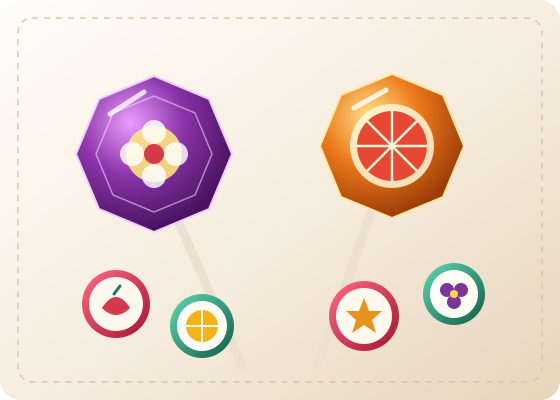
Inspired by centuries-old Venetian glassmakers, slice-and-cut image candy begins on a heated table as chunky colorful logs—opaque white satin wedges arranged around ruby triangles to form grapefruit segments, or purple petals wrapped around a golden stamen core.
Once the giant cross-section mosaic is assembled into a thick cylinder weighing ten to twenty pounds, two candymakers roll and elongate the tapering cone into slender six-foot canes. As the cane cools brittle, a sharp steel cleaver taps crisp medallions off the end—revealing razor-sharp citrus wheels and blossoms running all the way through every piece.
Precision Confectionery Reference
Kettle Boil-Stage Explorer & Batch Scaling Matrix
Every few degrees on a calibrated thermometer unlocks an entirely different sugar structure. Select a classic confectionery boil stage and choose your kettle batch yield to inspect working parameters and scaled gram ratios.
Nearly 99% pure anhydrous sugar solids cool into optically clear amorphous glass. This is the flagship stage for botanical lollipops enclosing edible flowers, dehydrated citrus wheels, and vibrant fruit acids.
Ice-Water BehaviorSnaps cleanly like thin windowpane glass
Hosting an Artisanal Lollipop Tasting Flight & Craft FAQ
Presenting small-batch candies on slate or walnut boards—sequenced from delicate floral citrus toward roasted sesame and spiced demerara—turns after-dinner sweets into an interactive sensory conversation.
Score warm test pours or serve whole lollipops alongside sparkling mineral water, roasted oolong tea, or short espresso shots.
Molten hard-crack sugar sits near 300°F—nearly ninety degrees hotter than boiling water. Any free water inside a fresh flower petal, rosemary leaf, or orange wheel flashes instantly into steam, clouding the candy and scorching green chlorophyll brown. Confectioners press and low-temp dehydrate all botanicals crisp-dry before embedding them.
Hard-crack sugar glass is naturally hygroscopic, drawing invisible moisture from humid room air onto its surface. Wrapping cooled lollipops within ten minutes of demolding inside moisture-barrier cello bags and storing jars with food-safe silica packets below 45% relative humidity preserves mirror gloss for months.
Alcohol- or water-heavy baking extracts flash off violently when stirred into hot syrup and introduce unwanted moisture that softens the outer rim. Cold-pressed citrus oils, steam-distilled spice oils, and solvent-free botanical reductions carry concentrated aroma without diluting sugar solids.
Start with high-clarity herbal or citrus profiles (such as Meyer lemon verbena or yuzu), move to tart berry-floral infusions (hibiscus or boysenberry-lavender), follow with savory herb-salt combinations, and close with rich caramelized demerara, honey, or toasted nut brittle pops.