
1. Informational & Culinary Scope
All articles, interactive pairing guides, boil-stage charts, and batch weight formulas published on Prism & Kettle are provided strictly for general culinary education and confectionery craft inspiration. Nothing on this website constitutes commercial manufacturing certification, nutritional counseling, or professional safety training. Readers who choose to cook sugar or prepare confections in a home or studio kitchen assume full responsibility for safe workspace setup and equipment handling.
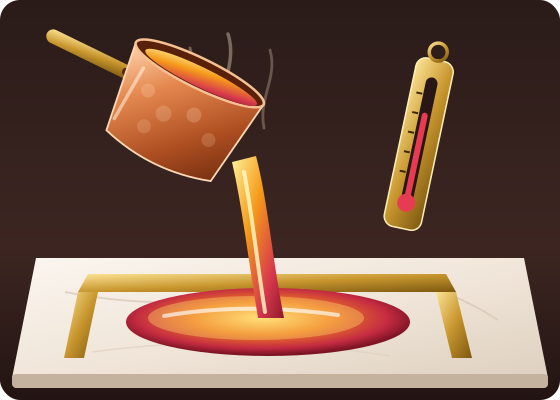
2. High-Temperature Molten Sugar Precautions
Hard-candy and lollipop syrups routinely reach temperatures between 300°F (149°C) and 336°F (169°C), and viscous molten sugar clings strongly to skin. Before attempting any kettle boil:
- Keep a large bowl of ice water within arm's reach of the stove and casting slab at all times.
- Wear closed-toe footwear, long cotton sleeves, and insulated, food-safe nitrile-over-cotton sugar-pulling gloves before handling warm ribbons.
- Ensure marble slabs, silicone lollipop molds, metal scrapers, and botanical inclusions are bone-dry; stray water droplets trapped beneath 305°F sugar can spatter unpredictably.
- Keep young children and household pets completely clear of the stove and cooling slab until pots, brass bars, and cast candies have returned to room temperature.
3. Botanical, Essential Oil & Allergen Awareness
Never embed florist-shop flowers, ornamental garden blooms, or non-food fragrances in confectionery. Use exclusively verified culinary-grade, unsprayed edible blossoms (such as culinary Viola tricolor, hibiscus sabdariffa, chamomile, or culinary lavender) and food-grade, FCC-certified cold-pressed flavor oils measured carefully by drop or milliliter.
Many artisanal candy flavor combinations discussed in this almanac feature tree nuts (such as pistachio or coconut), sesame seeds, dairy butter, or bee products (honey and honeycomb). Always label homemade confections clearly with every ingredient when sharing at gatherings, and remember that whole hard candies and lollipops require attentive supervision around young children.
4. Equipment & Thermometer Calibration
Ambient barometric pressure and elevation alter the boiling point of water—and therefore every stage of sugar cookery. Test your digital probe or brass stem candy thermometer in briskly boiling water before each session; for every degree water boils below 212°F (100°C) at your altitude, subtract that same number of degrees from target hard-crack temperatures.
5. Questions or Corrections
If you spot a technical discrepancy or wish to inquire about an editorial passage, please write to our Savannah desk at notes.prismkettle@gmail.com.